By Frances Grace Fyfe
When I went to print out these interview questions at Zoubris photocopy in the Mile End, one of the owners recognized Leila Marshy’s name and warned me “she’s trouble.” I brought the questions with me to Caffe della Pace, on the corner of Van Horne and Hutchison, the site of some of the writer/publisher’s previous rabble-rousing. There, we discussed Baraka Books’ new series, how it relates to Leila’s organizing work with the Friends of Hutchison Project, and the value of publishing with a quick turnaround.
Read Quebec: Can you talk about TRACTION’s origins? Where did the idea for a series of short books on contemporary social issues come from?
Leila Marshy: It came out of a conversation between myself and Baraka publisher Robin Philpot. Things in the world were feeling like they were falling apart. Gaza was being continually bombarded. People were experiencing the full measure of Donald Trump. And I was talking about how during revolutionary times, pre-social media, pre-internet, people exchanged little pamphlets. We thought, wouldn’t it be neat to reproduce that? Social media fulfills a lot of that purpose now, but it can’t go deep. Hence the idea for TRACTION. We would have short, small, easily digestible books that, alone or together, can provide a kind of education about the world, patterns of power, and social justice.
RQ: I was curious about the barcodes on the front of the books.
LM: That was intentional. I wanted the book to look like a consumer item. Sometimes a book has an aura about it, a kind of delicacy. This is a book you can fold up and put in your pocket. You can make notes all over it, you can share it. It’s part of the demystification of the book. I think books can be precious and writing can be precious. And I’m anti-precious.
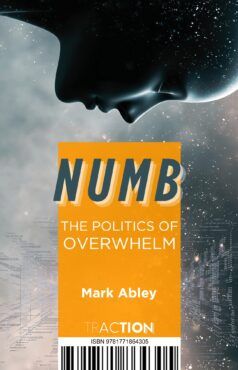
RQ: The first two books, Judi Rever’s Rwanda’s 30 Year Assault on the Congo and Yakov Rabkin’s Zionism Decoded, address specific ongoing humanitarian crises. Two more will come out in June: Numb by Mark Abley is about the hollowing-out of collective political action in our contemporary moment, and Last Call for Canada by Peter McFarlane is an interrogation of Canada’s relationship with the United States.
LM: The way I see it is they’re all engaging with something of urgency today.
Zionism Decoded is about Israeli exceptionalism and the myths and beliefs that have propped it up.
Rwanda’s 30 Year Assault on the Congo traces the roots of Paul Kagame’s campaign in the Congo, and the impunity granted to him by Western powers poised to profit from the most resource-rich nation in Africa.
And then Mark [Abley, author of Numb] is engaging with the retreat of humanity. As a journalist who chronicles the Trump administration recently wrote in her Substack: “We can’t go numb. That’s exactly what they’re counting on.”
Last Call for Canada explores the consequences of being a vassal state for first Britain and now America. Is this what we want going forward? I don’t think so.
RQ: Mark’s book reminds me we are living in a time when public and online life has become infused with protest but rarely builds enduring power.
LM: Right, without any traction.
RQ: Traction! Exactly.
LM: When putting the books together we’re thinking about work that generates change. Like the pamphlets [for workers’ rights and anti-war movements] that pushed for these big social and political changes. It was about public education leading to action.
RQ: It seems to me the book is almost less important than the people that will gather around it. I was at the launch of [Baraka books’] Eyes Have Seen and Razing Palestine, and both times had a hard time finding a seat…
LM: There’s a real need for finding your people, being in an actual room with them. I really felt that during the launch of Razing Palestine people were out not just for the book, but to find community and to build common cause.
RQ: That book dealt with the policing of the pro-Palestine movement in Canada. Zionism Decoded seems to provide more historical background for that censorship, teasing out Zionism’s roots in a European colonial context and its normalization in Canadian discourse.
LM: It was important for us that Yakov [Rabkin] be the person to write about Zionism. He is one of the leading historians of Zionism in the world. He approaches it from a place of deep immersion and understanding. We didn’t want somebody to rant or to target.
RQ: Do you feel like Canadian public opinion about Palestine has changed from the time the book was proposed?
LM: Change, what is change? Change is invisible until it explodes, to paraphrase Langston Hughes. In a parallel universe, the unremitting brutal Israeli aggression against Gaza would have resulted in pushback from the so-called democratic free world (including Canada). Yes, there have been shifts but much of that is still invisible. Instead of reasonable change we are going to have to wait for or instigate more radical change.
RQ: Is it important for you to have a quick publishing turnaround?
LM: Yes. Robin and I don’t spend a lot of time hesitating. If something needs to be done, we’ll do it. If I make a mistake or get it wrong, I’ll fix it. But I don’t agonize much beforehand. We want to be responsive and productive in the moment.
RQ: Do you often have people at launches you don’t know coming up to you?
LM: Yes, and I always talk to them.
RQ: Well, I know you’re very chatty. That seems important for the work you do.
LM: When we launched Razing Palestine, I was at the door greeting people until the last minute. And I was saying, Who are you? Why are you here? Because I’m genuinely curious. I can’t tell you how much I love seeing a curious young person. People who show up are my favourite people—and I say this as someone who sometimes struggles to show up. So I really respect the people who do.
At the launches for Decoding Zionism and Rwanda’s 30 Year Assault on the Congo, for example, there were a lot of serious young people. I like when people are serious. I don’t mean serious personality, that’s irrelevant. But people who make an effort to be on the right side of history, there is a gravitas to that. Being ethical and vigilant. We need to take these things very seriously.
RQ: I was Googling your name beforehand. I saw you had co-created the Friends of Hutchison Project. What was that?
LM: I was living on Hutchison at the time and the Hasidim wanted to renovate a small decrepit synagogue just a few doors down from me. It was so small I’d never even noticed it. And there was this rather vocal and active group of Outremont residents who protested against it. I basically started Friends of Hutchison to defend the Hasidim. They were strangers to me but I went door to door and distributed a leaflet. Eventually, I met everyone on the street. We did big assemblies where 200 people came and it was the first time people talked across these groups, and over the years we had lots of events and activities. I helped Mindy Pollack run for office; she eventually sat as municipal councillor for three terms––the first Hasidic woman to hold public office in the world. I learned a lot about the community and made some very dear friends. It really was just about being a good neighbour. If I’m your neighbour, I’m going to defend you. I don’t need any other reason than that.
RQ: There’s a quote in Numb where Mark [Abley] writes about the “numb [that comes from] the shock and awe of watching violence unfold all the time.” He comes to the conclusion that one of the ways we will have to respond to the ongoing fragmentation of the social fabric brought on by technocratic and far-right governments is to be organized in one’s local community. Your story reminds me of his point—that there’s no politics that isn’t local.
LM: Local is the opposite of abstract. People can see themselves as ethical in the abstract, but how they act and conduct themselves in the day to day is the actual measure. Mark’s book also explores how tech companies are capitalizing on this moment to further erode political action by creating increasingly elaborate and invisible barriers to action. AI is doing away with difficulty, our willingness to engage in and confront difficult things. But if we don’t engage in things that are difficult, we’re going to lose our autonomy. We’re going to lose our individuality, our dignity.
RQ: That seems to relate to what you’re telling me about your publishing ethos, the fact that you and Robin [Philpot] are willing to make mistakes.
LM: If you are too anxious about being perfect and getting it right, then you might turn to AI and go, write this up for me, do an outline, what are the steps, how do I do it, what’s the best way? Personally, I’d rather trust my own flaws over AI hallucinations. I mean, even if we get things wrong, it’s still amazing. Because one, at least we tried, and two, it’s a great reason to try again.
Frances Grace Fyfe is a graduate student in English living in Montréal.
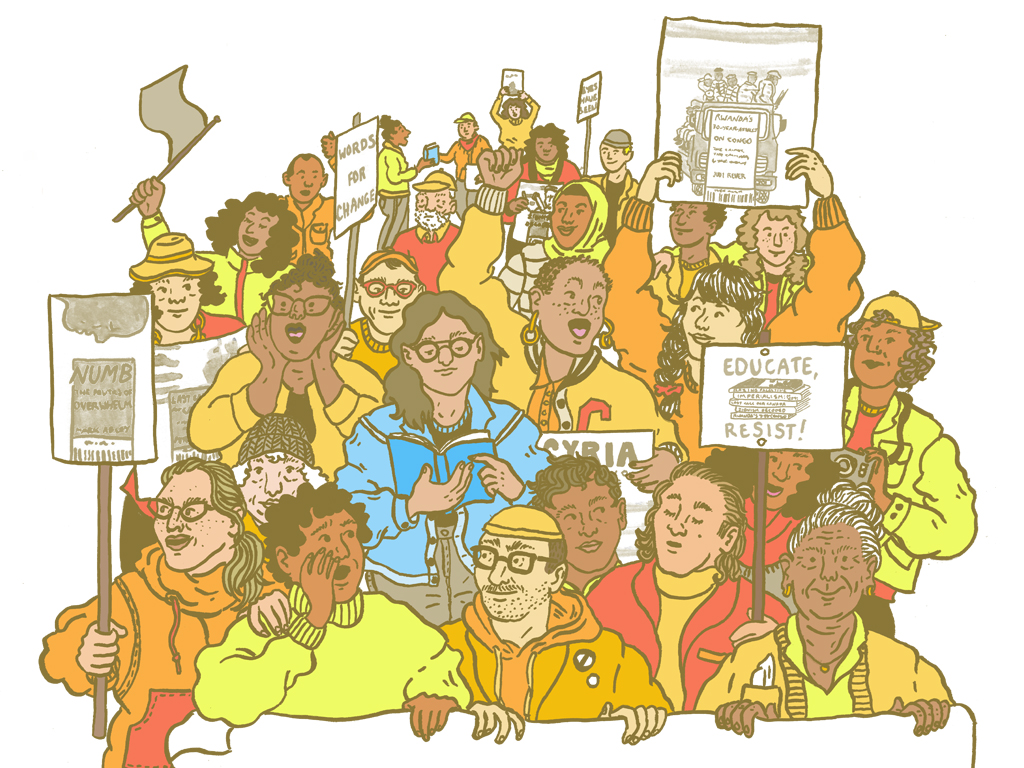
Illustration by Cesario (Cee) Lavery.