By Fred Anderson
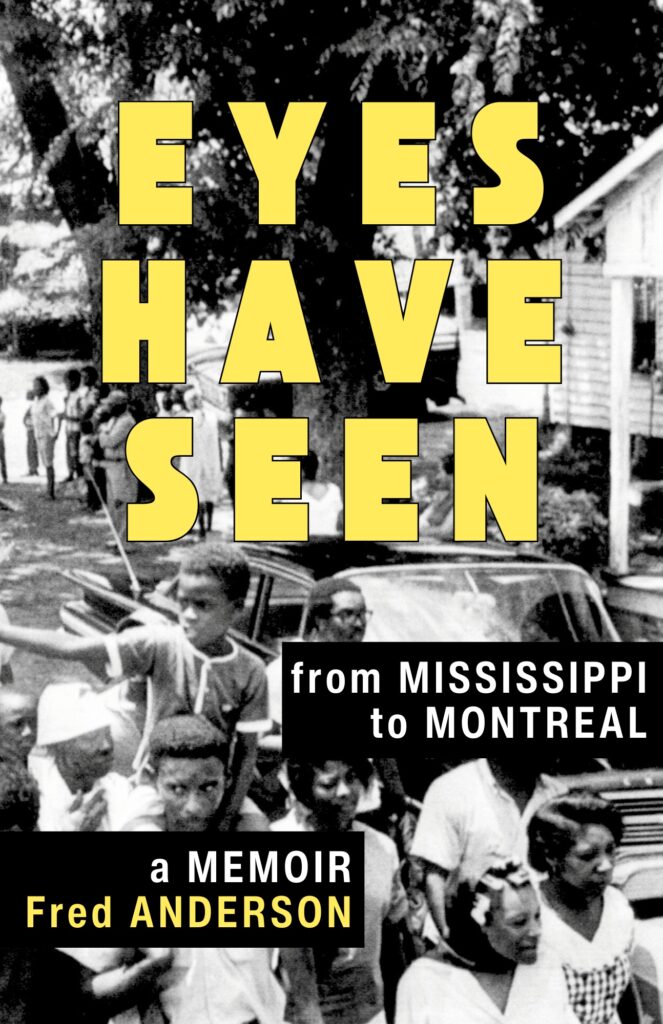
A year has passed since I finished writing Eyes Have Seen (Baraka Books).
At the time, completion felt definitive. The manuscript was shaped, the scenes arranged, the facts checked as carefully as memory allows. I closed the file with the sense that the work had reached its natural end. What I did not anticipate was how insistently the book would continue to work on me.
During the writing, I approached memory as evidence. I believed the task was to retrieve experience, order it, and render it faithfully. Accuracy mattered–not only factual accuracy, but emotional proportion. I was attentive to tone, wary of excess, and suspicious of sentimentality. I trusted that if I described events with sufficient precision, meaning would emerge on its own. That faith gave the project coherence. It also gave me a sense of control over material that once felt volatile.
Time has unsettled that belief.
One year later, I understand memory less as a repository than as a living process. It does not preserve experience so much as it revisits, revises, and renegotiates its meaning. Writing Eyes Have Seen did not stabilize the past; it disturbed it. Scenes I believed were complete returned with altered emotional weight. Moments I thought I understood began to loosen, revealing dimensions I had either overlooked or deliberately bracketed in the interest of narrative clarity.
The act of writing produced understanding. Time produced reconsideration.
I titled the memoir Eyes Have Seen because sight felt authoritative. To see was to know; to know was to testify. That assumption shaped the book’s voice. It allowed me to speak with conviction and move forward without paralysis. Distance, however, has complicated the authority I once granted to sight alone. Seeing, I learned, is only the first stage of understanding. The eyes register quickly; interpretation arrives later, shaped by context, reflection, and emotional readiness. What I once recorded as certainty now reads as an early draft of comprehension.
After publication, the book entered a public life I could not control. Readers encountered the narrative through their own histories. They recognized themselves in moments I had considered singular. They responded not to my intentions, but to what the work made possible for them. In that exchange, the memoir shifted from testimony to shared artifact. Meaning multiplied. Ownership thinned.
This is one of the enduring tensions of memoir: the more precisely a writer renders a personal account, the more broadly it circulates.
What begins as individual witnessing becomes communal reference. The book no longer belongs entirely to the life that produced it. What followed was not relief, but a quiet I had not anticipated. During the writing years, the work imposed structure and urgency. There was always another revision, another decision. When that labor ended, I was left with the echo of what I had said. In that silence, the ethical dimensions of the project sharpened. Writing the truth required courage. Living alongside the written truth required patience.
With distance, I began to notice how the self on the page differed from the self-remembered. Not inaccurately–rather, selectively. The voice I gave my earlier self was composed, articulate, resilient. What time revealed was how often restraint stood in for tenderness, how frequently control substituted for vulnerability. This was not a failure of honesty, but a reflection of readiness. At the time of writing, I told the story I was capable of telling.
Time has continued to revise the narrative. Events I framed as endings now appear as thresholds. Hardships I rendered with controlled distance have softened into ongoing lessons rather than fixed wounds. Achievements I once treated as conclusions now feel provisional, asking to be inhabited more fully through living. The page preserved experience. Time returned it to motion.
This has altered how I understand revision itself. Revision on the page is finite; revision in life is not. No amount of craft can anticipate what distance will disclose. The memoir captured a particular alignment of memory, language, and self-understanding. It could not account for what would be learned later.
As a result, my understanding of truth in nonfiction has shifted.
I once believed truth resided primarily in accuracy and completeness. I now believe it also resides in acknowledgement of limitations–in recognizing what a narrative cannot hold. Eyes Have Seen was never meant to resolve a life. It was meant to mark a moment of recognition.
If I were to write the book now, some passages would open differently. I would allow more silence where I once pressed for explanation. I would trust ambiguity where I once insisted on clarity. This does not diminish the work. It confirms its honesty. Truth does not stand still; it matures.
I carry the memoir with me now not as a monument, but as a reference point–a record of who I was able to be at a particular moment. It reminds me that seeing is not a single act but a practice, one that deepens with time, reflection, and restraint. The eyes have seen. The work, it turns out, continues.
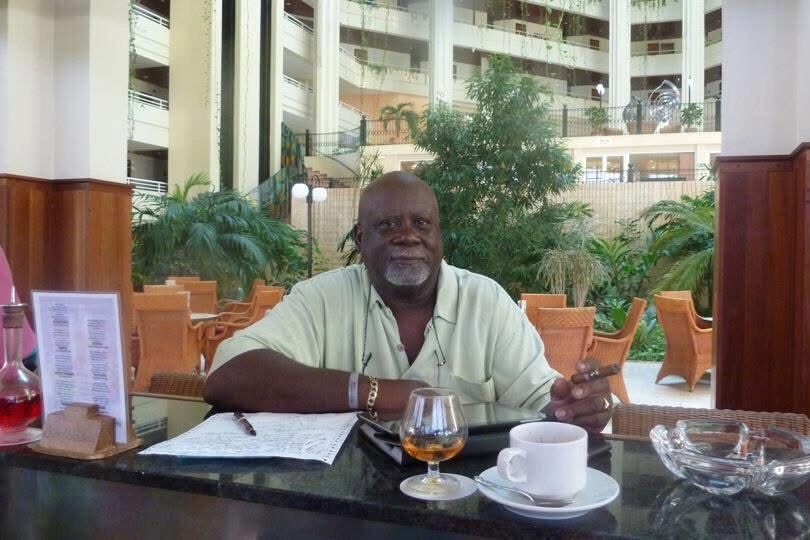
Fred Anderson is a writer of creative nonfiction whose work explores memory, testimony, and the ethical life of narrative. His memoir Eyes Have Seen examines personal history as cultural record. The book was shortlisted for the Quebec Writers’ Federation Concordia University First Book Prize (2025). He lives in Montreal.
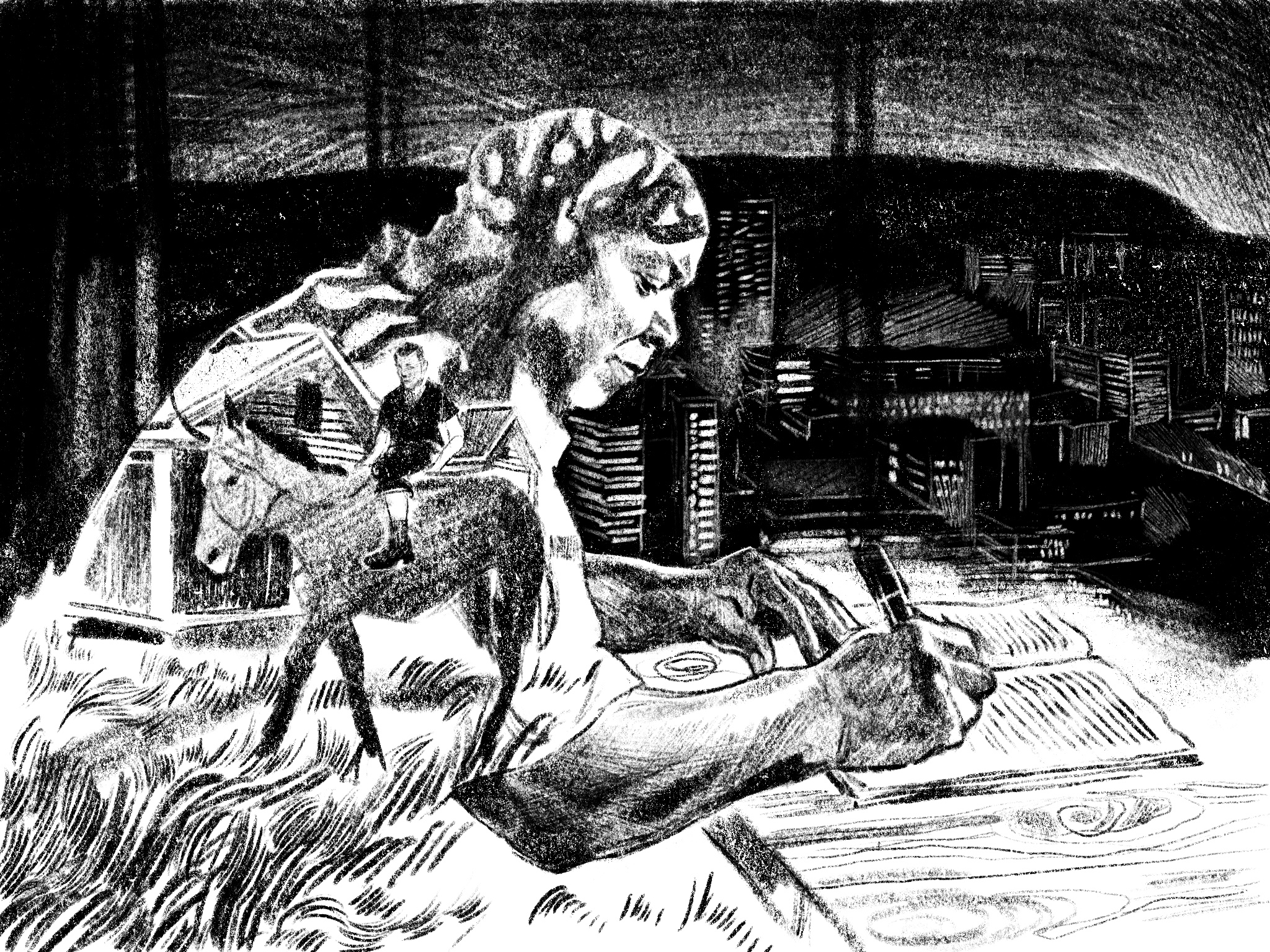
Illustration by Yann Pariot.